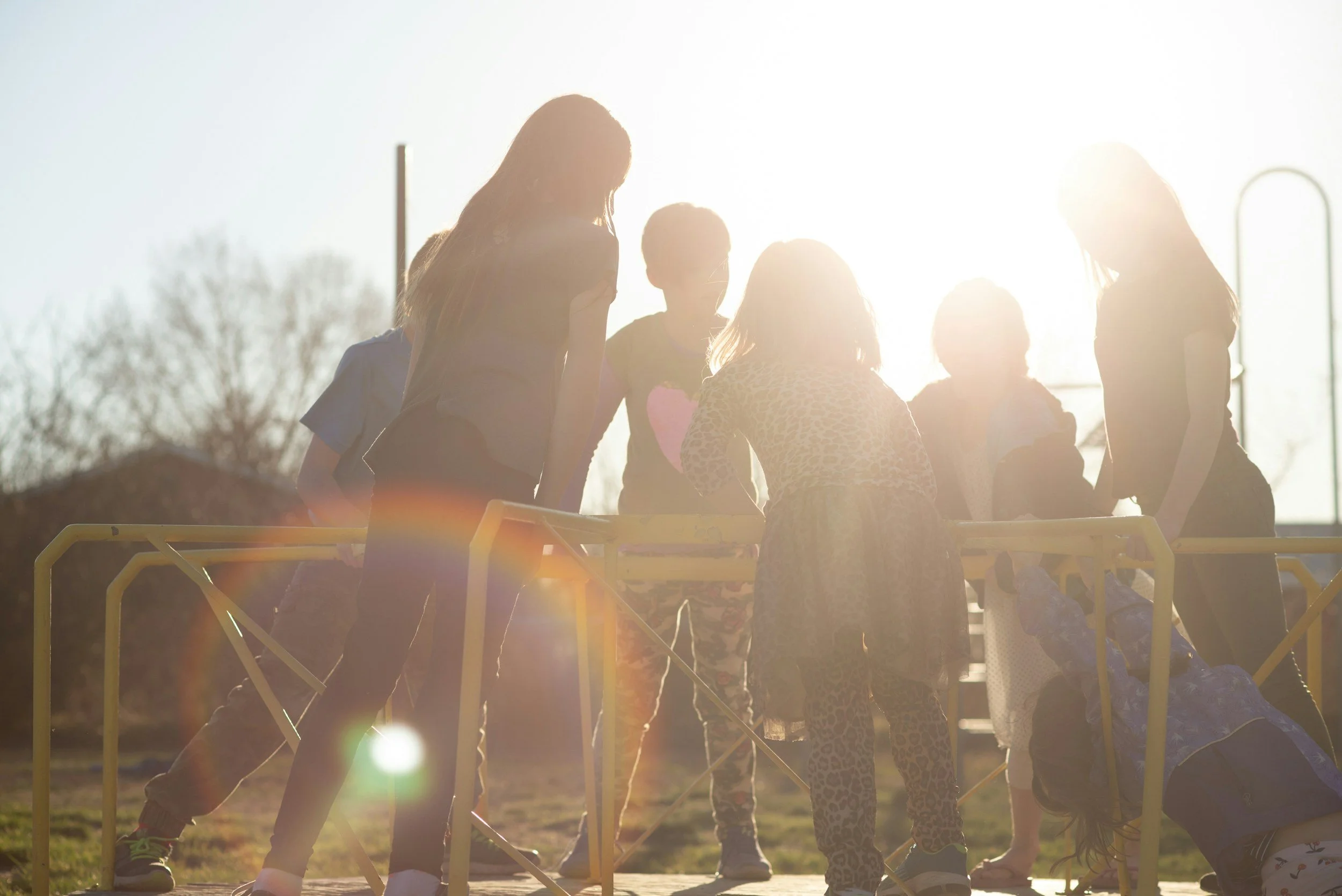
My sons have friends on our street, so many evenings they’ll be gathered in someone’s front yard playing. A few days ago, some of their play involved wrestling, and a kid got hurt. I walked down the street to join my husband to check on things and asked how the kid got hurt. Another dad answered, “Oh, they were just being kids.”
And I appreciated that.
Immensely.
Because my son had been part of the wrestling that had hurt the other kid and my mind had started to spiral with what had caused it, was it something I should have already talked with my son about and taught him about, if it was something I had already taught him did I not do it well enough, what character traits am I not instilling well enough in my oldest, how can I better show him these traits…and my mind keeps going and going and going and going.
Until this dad said, “Oh, they were just being kids.”
Because he’s right, my oldest was doing what so many other 4-year-old boys do.
I was talking with my husband about this incident and how I think I’ve internalized the belief that if I parent correctly, then I’m always calm and regulated, and my son handles situations with interpersonal and intrapersonal precision. I see the reels on social media and read plenty about trauma-informed care and how to parent to meet not only the external needs but also the internal needs of kids. But in learning all of this, I’ve seemed to lose space for the inevitabilities of being human. For both my son and me.
And I feel the wrestling I have with this extends beyond just parenting. I see this so often with my clients, too. They’ll worry something is wrong with them when I view that same thing as being entirely human. I tell them it’s okay to strive and set goals for yourself, but to remember nobody is going to be perfect. But far more often than not, I see clients pathologizing and wondering whether a diagnosis suits certain traits about themselves because they don’t fit this abstract “normal” we’ve come to define as a society.
But, to me, they’re just being human, just like my son is just being a kid.
So what do we do with this? What do I do with this seemingly best way of parenting that sometimes greatly contradicts my innate humanity? What do we do with the traits of ourselves that feel abnormal but are deeply ingrained in us as humans?

Here is where I want a really nice wrap-it-up paragraph that answers these questions. But, right now at least, I don’t know. But, I am struck that the end goal I get to when I walk through these scenarios — of me being constantly regulated and calm, and my son equally so, or my clients' quirks about themselves leveling out into this unknown “normal” we have seemed to somehow deem as the “right way” to be human — is actually not that great. It’s sterile, boring, and discomforting. Like looking at the ocean, but there’s not a single wave there; it’s completely still.
That isn’t “good” either, is it? I don’t think so.
So maybe I need to let my sons be kids. And I need to let myself be human too. And I need to continue working to step outside the good/bad dichotomy.
And just be.
That wrestling moment was just that: my husband responded well to it, the kid was okay, my son apologized, and they played together again the next day. Just being kids.
And maybe you just are being you, too. Unique, quirk-filled, non-pathologized, you.